Find the right automation guide.
Choose equipment, clarify your material and line conditions, or prepare a quotation. Start with the production step you need to improve.
What do you need to decide?
Start with the question, not a machine code. These records help you describe a new project, review an existing line or compare quotations.
Automation FAQ & Glossary
Clarify cycle time, takt time, payload, tooling and changeover before comparing equipment.
Explore terms and answersProject Downloads
Get enquiry, existing-line and quotation-comparison templates to fill in with your project information.
Get project templatesFeeder & Stacker Retrofit Checklist
A production-line retrofit checklist covering material interfaces, output, controls, layout, bundle removal and acceptance scope.
Read guideAutomation Machine Quotation Checklist
Prepare a comparable quotation request for feeding, stacking or steel-component welding equipment with this downloadable project checklist.
Read guideCore-material feeding
First compare how the core material arrives. Then prepare its dimensions, refill sequence and receiving-line interface.
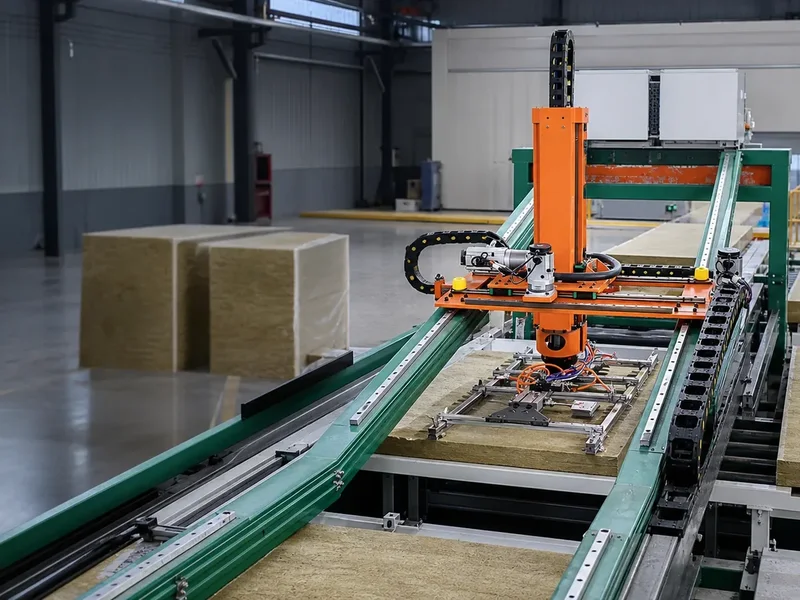
Rock Wool Feeding for Sandwich Panel Lines
Understand rock wool feeding stages, incoming material requirements and equipment selection for metal-faced sandwich panel production.
Read guideGantry vs Robotic Rock Wool Feeding
Compare the documented gantry and robotic rock wool feeding configurations, including layout, speed terminology and material testing.
Read guideRock Wool Continuation: Project Input Guide
Prepare rock wool strip dimensions, delivery pattern, refill sequence and line layout for a gantry or robotic continuation machine enquiry.
Read input guideColumn Panel Feeder: Selection Input Guide
Prepare core-board dimensions, surface condition, stack arrangement and receiving-line inputs for a column-type integrated panel feeder review.
Read input guideFinished sandwich panels
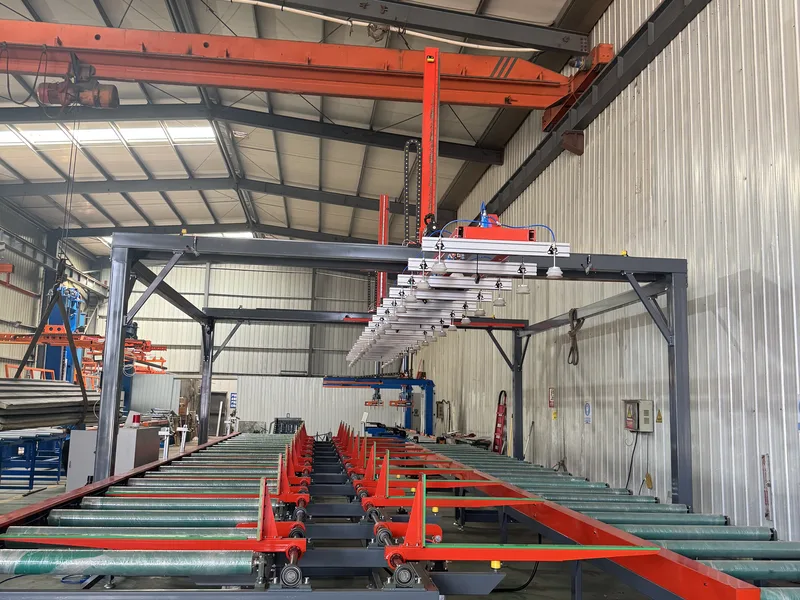
Choose the handling method, check the actual panel and plan the completed bundle. Mechanical panel stackers and gantry vacuum stackers have separate specifications.
Choose the machine and panel arrangement
Sandwich Panel Handling & Stacking Guide
Choose a sandwich panel stacking configuration by panel geometry, turnover needs, handling method, stack height and downstream removal.
Read guideSandwich Panel Stacker: Selection Input Guide
Prepare mechanical panel stacker drawings, turnover requirements, bundle patterns and line-exit handover without mixing the separate gantry model’s limits.
Read input guideCheck vacuum pickup, timing and acceptance
Vacuum Pickup Suitability for PU Sandwich Panels
Check metal faces, roof profiles, protective film and panel weight before specifying a gantry vacuum stacker for PU sandwich panels.
Read guideSandwich Panel Stacking Cycle Time & Line-Speed Matching
Compare the stated 20–30 second stacking cycle with panel arrival intervals, cutting pauses, stack changes and bundle discharge requirements.
Read guideGantry Panel Stacker FAT & Acceptance Checklist
Prepare a gantry stacker factory acceptance test with agreed panel samples, scope, cycle boundaries, surface checks and documented handover.
Read guidePlan long-panel turnover and quotation scope
Long-panel stacking and synchronized turnover
For panels over 12 m, separate stacking-only single-unit review from synchronized dual-unit turnover and record the support and line questions.
Read guidePanel stacker cost factors and quotation scope
Compare configuration, conveyors, downstream handover, integration and services using the same project brief, without assuming a fixed price.
Read guideC/Z profiles & floor deck
Begin with the section drawing. Record incoming orientation, the required finished bundle and full-stack handover before discussing a configuration.
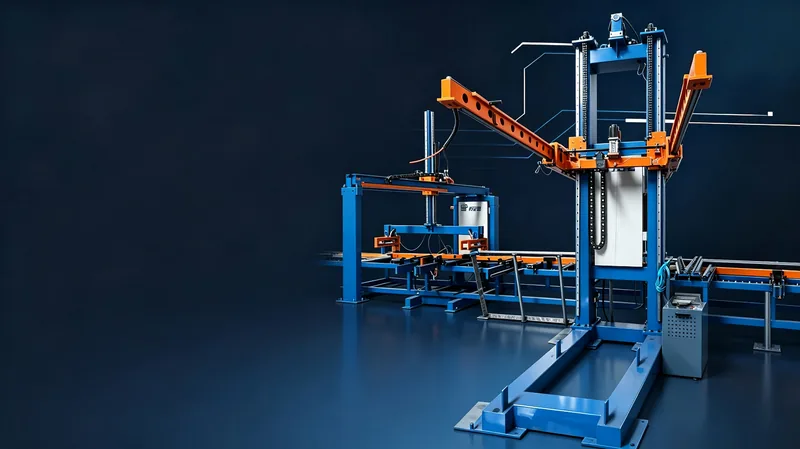
C/Z Purlin & Metal Deck Stacking Guide
Plan purlin and metal deck outfeed using section drawings, orientation, cycle timing, stack patterns and removal requirements.
Read guideC/Z Purlin Stacker: Drawing & Bundle Inputs
Prepare C and Z section drawings, exit orientation, bundle patterns and changeover requirements for a project-specific purlin stacker review.
Prepare project inputsFloor Deck Turnover Stacker: Selection Inputs
Prepare floor deck profile drawings, incoming and stacked face orientation, surface requirements and line handover information for a turnover stacker enquiry.
Prepare project inputsSteel-component welding
Define the workpiece, fixture and process scope. Keep quotation inputs separate from the evidence needed for agreed acceptance.
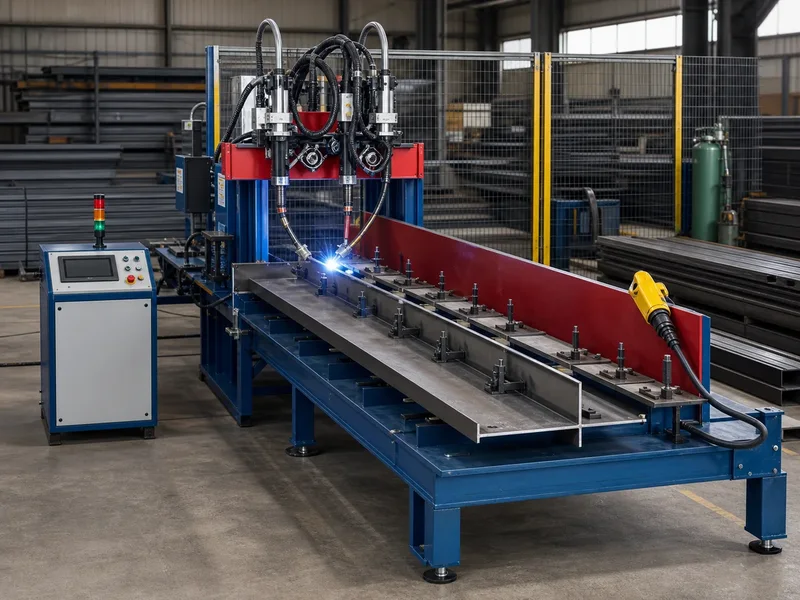
Purlin Cleat Welding: Drawing & Fixture Inputs
Prepare assembly drawings, weld locations, sample parts and fixture interfaces for a purlin cleat plate welding machine configuration review.
Read guideTie-Rod Equipment: Cutting & Welding vs Welding-Only
Compare integrated cutting-and-welding and welding-only tie-rod equipment by incoming workpiece condition, process scope and quotation boundaries.
Read guideAutomated Welding: Acceptance Evidence Preparation
Prepare drawings, procedure references, representative samples and evidence responsibilities before agreeing an automated welding machine acceptance protocol.
Read guideFrom a finished stack to PE wrapping
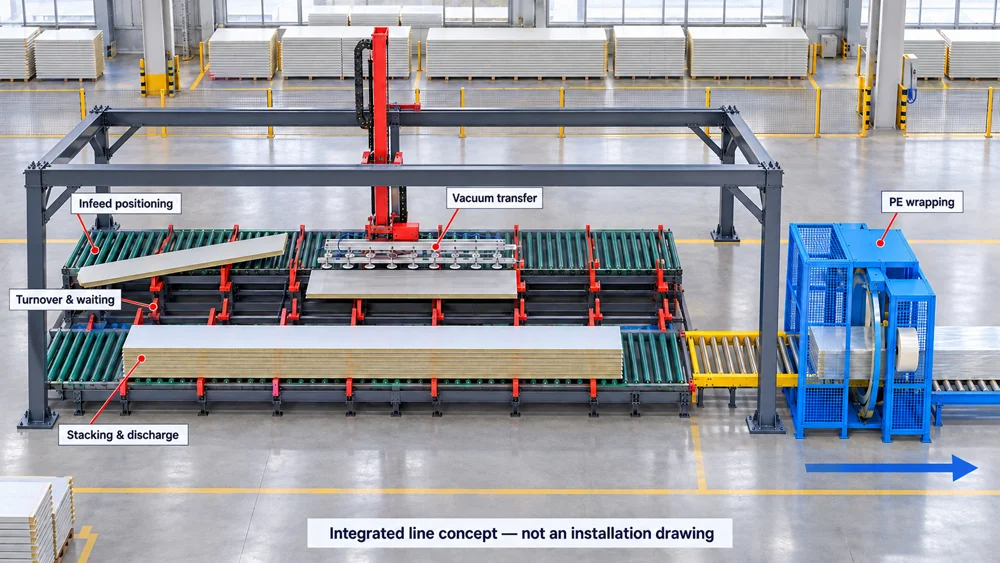
Explore the proposed link between gantry stacking and whole-bundle PE wrapping. The workflow preview explains the sequence; it is not footage of a delivered installation.
Watch how the stages connect
- Turn the panel into the waiting area with the mechanical flipping forks.
- Transfer it with the gantry suction frame and form the stack on the outer conveyor.
- Move the completed bundle in line into the PE wrapping machine.
Confirm the finished bundle, conveyor direction, wrapping opening and controls together. Linking the products does not establish compatibility for every project.
PE trial & acceptance preparation → — Agree representative samples, finish requirements and a traceable evidence pack.
PE wrapping input guide → — Prepare bundle dimensions, film-roll details and both conveyor handovers.
Back to topics ↑Bring the guide back to your project.
Product brochures describe the machines. Project templates help you record the materials, line interfaces and supply scope for your enquiry.